

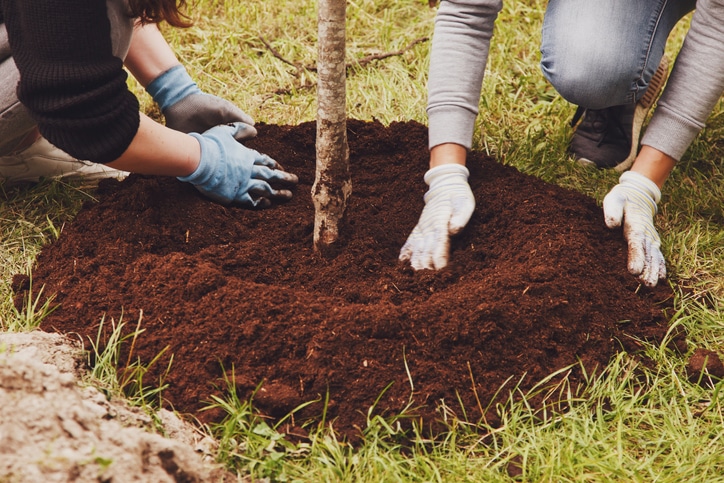
Put in a new tree and are you second guessing whether it should be staked? Concerned that a hard storm could put it on a tilt or break it before it is properly rooted? You have probably been told by some that staking is good for a young tree and by others that it is not.
We get this question from homeowners in Lancaster and environs on a regular basis at CBC Lawn and Tree, LLC (CBC Tree Service). For some expert counsel on your property, pick up the phone and call us at (803) 680-2239.
On the surface staking is insurance of a sort. In reality it is not so straightforward. We put together the following to set out when staking is called for and when it is not, and how to do it properly if you choose to.
The Case for Staking
Support is what it is all about. A new tree’s root system is shallow and has not put down anchor yet. With our dense clay and the kind of weather we have around here, that can be a worry. Then again, staking is not always required; many a young tree will stand fine without it. One has to know which is which.
Pros of Staking
There are sound reasons to stake a tree in the right circumstances:
- To see off top-heavy trees that cannot yet bear their own canopy
- To hold a tree upright in an exposed or windy spot
- To prevent bare-root or loose plantings from moving until roots are in
- To head off a lean in heavy clay
- As a shield against lawn mowers, pets or foot traffic in an active yard
For a species with a thin trunk and a lot of top weight in an open area, staking may well mean the difference between a straight, healthy specimen and one that does not make it.
Cons of Staking
All too often staking is done when it is not warranted and does more harm than good. Consider these drawbacks:
- A staked tree will not build a thick, strong trunk because it does not have to sway
- The roots can remain weak as the tree puts its faith in the stake
- Ties on for too long will girdle the trunk and cut the bark
- Do it wrong and you will wound the trunk and bring in pests
- It is common for people to let stakes sit for years after a season would have sufficed
What most do not realize is that a tree put under the mild stress of the breeze will grow stronger, with a better trunk and deeper roots. Put it in a straitjacket and you take that away from it.
Doing it Right
If support is needed, some care is in order:
- Set two or three stakes outside the root ball, do not run them through it
- Make use of a soft, wide tie that will not mar the bark
- Allow a few inches of give in the trunk
- Put the ties low, say a third of the way up
- Take the stakes out in a growing season or less
You want to be a guide to the tree, not a cast.
Some Trees Can Be Left Be
A small tree in a sheltered location that is well planted needs no staking. If the root ball is set and the trunk holds the canopy, nature can handle it. A check after planting and an eye on it during the first round of storms is generally enough. When in doubt, ask a pro familiar with the area.
Get in Touch with the Experts
The right move will hinge on the soil, the species and the exposure of your yard. Our licensed and insured crew at CBC Lawn and Tree, LLC is on hand 24/7, offering everything from staking advice to professional trimming and pruning. We cover Lancaster, Rock Hill, Fort Mill, Indian Land and the rest of the surrounding communities and provide free estimates.
Call CBC Tree Service at (803) 680-2239 and let your young trees have the start they should have.