

Commercial buildings aren’t immune from the effects of wind and exterior noise. Even well-constructed buildings can experience rattling windowpanes on windy days. Traffic noise, as well as noise from planes and helicopters, can also make it hard to concentrate.
Dual-pane windows and wall insulation help. But also consider adding trees that can act as a shield. While they won’t keep all wind and noise from reaching your property, they can help tremendously.
Why Trees Form the Perfect Barrier
You could put up walls around your property to block both wind and noise. But those aren’t nearly as pretty as trees. The colors of leaves and flowers can make your commercial property look wonderful.
Even more importantly, greenery on commercial properties can improve morale. The grounds are more inviting to customers and potential tenants, too. If you were looking for office space to rent, a tree-lined space would seem more appealing than extra concrete.
Does the Type of Tree Matter?
The type of tree you choose for the barrier makes a huge difference. It’s best to use something fast-growing so that the barrier takes shape quickly. Trees with dense canopies are also good choices. For consistent coverage, it’s best to plant evergreens that keep their leaves or needles all year long. But you can create a mixed deciduous-evergreen barrier if you prefer.
Wind and noise don’t stay at canopy height. You need to plant tree species that have lots of lower leaves and branches, such as Italian cypress, or plant shrubs in front of or behind the trees. The key is to ensure that all spaces in the tree “fence” are covered.
Depending on the species, you can plant the trees in a line, or you can plant a few rows with the trees staggered. What matters is that the trees create a wall of sorts that interferes with wind and sound waves that flow toward the property.
Pruning Can Make or Break the Barrier
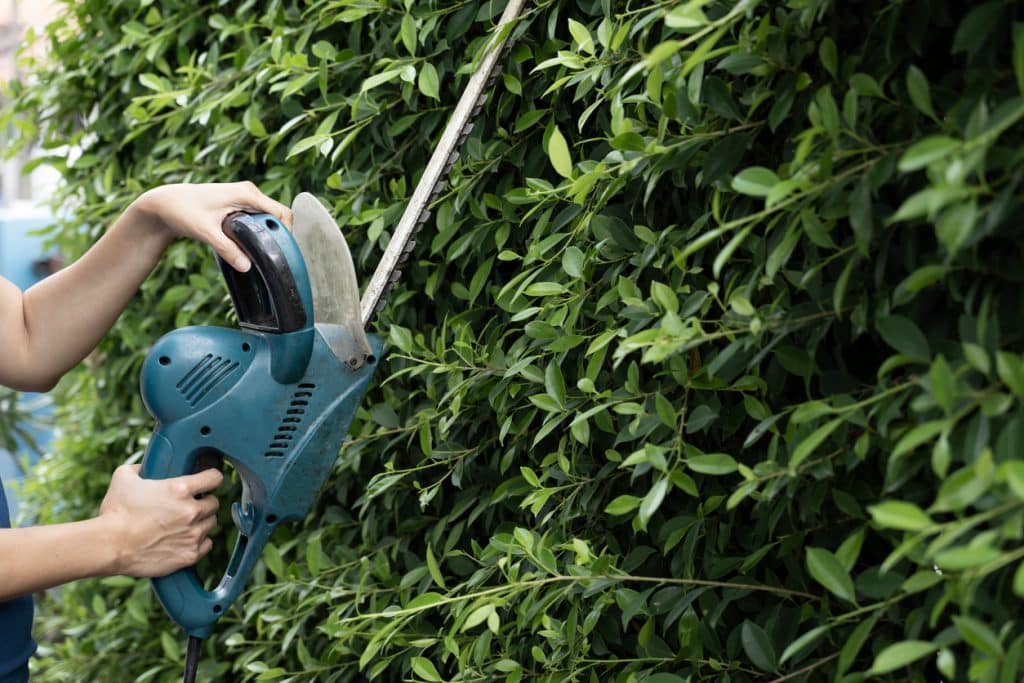
You’ll need to take care when trimming the trees because cutting in the wrong areas can nullify any insulating benefits. If you trim away enough branches so that air can flow unimpeded through the branches, you’ll hear more noise and feel more wind.
Air flowing through the branches is desirable to prevent fungal infections. However, if you’re not careful, you can trim away too much. That’s when the airflow can become problematic. Trim only those branches that absolutely need to go for the health of the tree. Limit pruning for shaping purposes. You may want the trees to look neat and tidy, but don’t remove more foliage than is necessary.
Conclusion
A line of trees is one of the best ways to protect a property in windy and noisy areas. But trimming those trees takes special care. If you’re not sure just how much you should cut, you can turn the tree trimming over to an arborist. If you decide to try trimming the trees yourself, go slowly, knowing that you can cut off more, but you can’t add branches back. If you have concerns or require commercial tree services, contact CBC Lawn & Tree in Lancaster, SC.